The Vitamin That May Change What Glioblastoma Can Do
A clinical trial at the University of Calgary is testing high-dose niacin against glioblastoma, with early results that surprised the research team.
When a Common Vitamin Enters One of Medicine’s Hardest Fights
Ed Waldner was 55 when he started dragging his heels - literally. For months, fatigue had been his constant companion, the kind that didn’t improve with more sleep or less activity, the kind that made him wonder about sleep apnea. Then came the subtle shifts in how he walked: heels catching, gait going slightly wrong. When the symptoms peaked badly enough, he went to the Emergency Department. The doctor found a mass on his brain and told him he needed an oncologist.
The mass was glioblastoma.
It is the most aggressive brain cancer that occurs in adults, and its standard treatment protocol - surgery to remove as much tumor as possible, followed by radiation and chemotherapy - has not meaningfully extended survival in two decades. The cancer returns. That is what makes the curiosity at the center of a University of Calgary clinical trial so striking: the compound researchers are pairing with that same standard treatment is niacin, a form of vitamin B3 that most people associate with a supplement bottle on a pharmacy shelf.
What Niacin Is Actually Doing Inside a Tumor
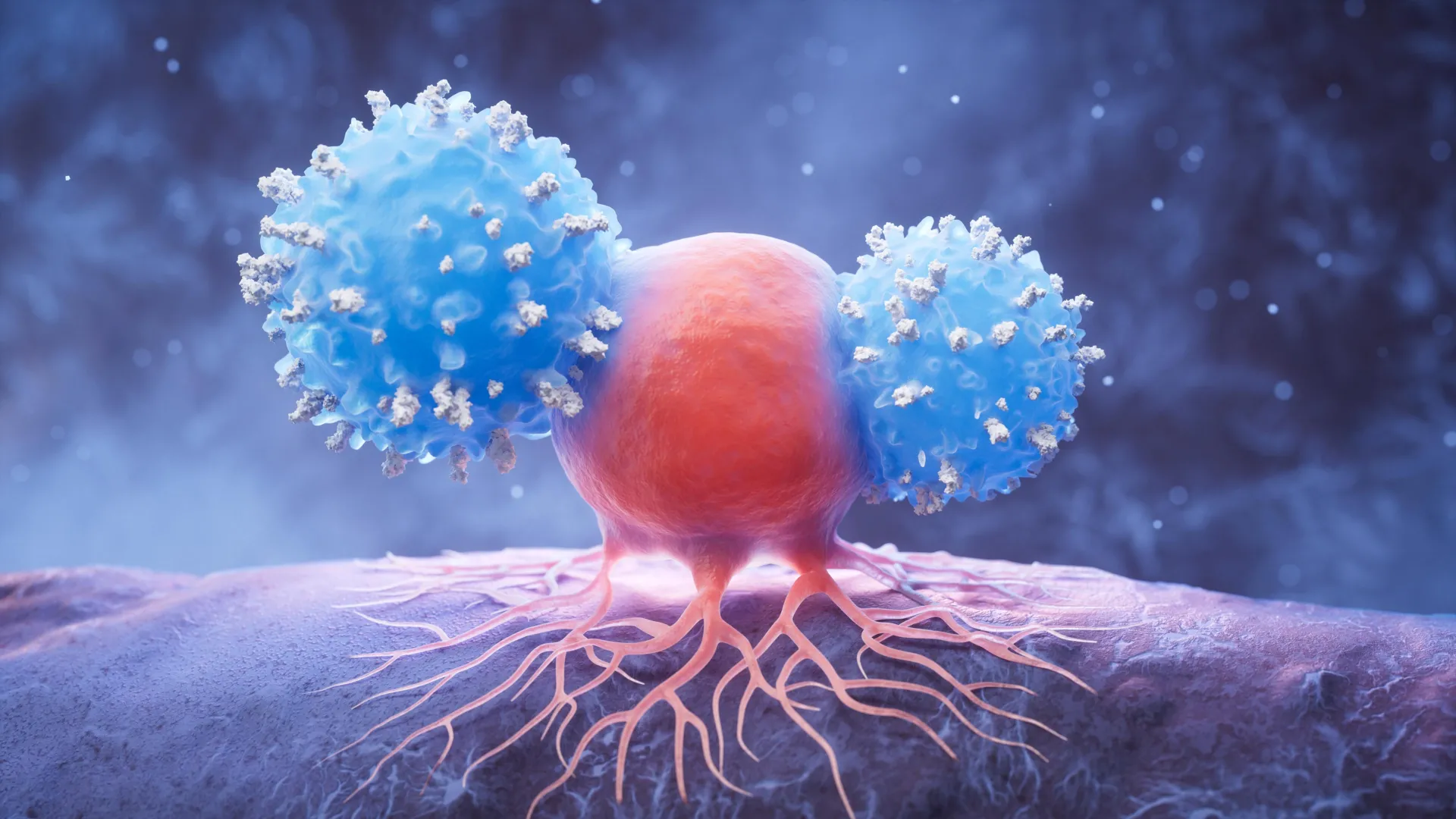
The logic behind the trial is not nutritional in the conventional sense. Glioblastoma is unusually effective at suppressing the immune system - essentially disabling the cells that would otherwise identify and attack the tumor. Wee Yong, a neuroscientist and professor at the Cumming School of Medicine at the University of Calgary, has spent years studying how the immune system interacts with the brain. His laboratory work, conducted in mice, found that niacin could rejuvenate those suppressed immune cells, restoring their ability to do what they are designed to do: recognize and destroy cancer.
Yong describes it as an ongoing battle for the brain. The tumor works to silence the body’s own defenses; niacin, at high controlled doses, appears to reverse some of that silencing. When early mouse experiments showed extended survival, Yong and his collaborator Dr. Gloria Roldan Urgoiti - a brain cancer specialist and clinical associate professor also at the Cumming School of Medicine, and like Yong a member of both the Hotchkiss Brain Institute and the Arnie Charbonneau Cancer Institute - moved the question into a Phase I and II clinical trial in humans.
The version of niacin under study is controlled-release, and dosing is carefully calibrated. This matters because high doses of niacin, like high doses of most vitamins, are toxic if unmonitored. The trial is not testing whether patients should take more niacin at home. It is testing whether a specific, medically supervised dose, layered onto chemotherapy and radiotherapy, changes what glioblastoma is able to do.
The Number That Stopped the Trial From Stopping
Before the trial enrolled its first patient, the research team set a hard threshold. If progression-free survival at six months did not improve by at least 20 percent compared with results from prior studies, the trial would be terminated. That kind of pre-registered benchmark is relatively uncommon in early oncology trials, and it gave the study an unusual built-in test of honesty.
The early findings from 24 patients cleared the bar.
At the six-month mark, 82 percent of participants showed no signs of disease progression. Against the baseline from earlier studies, that figure represents a 28 percent improvement. For a cancer where survival outcomes have been effectively static for twenty years, a 28-point gap in a small early cohort is the sort of number that earns careful attention rather than celebration - researchers are explicit that glioblastoma remains incurable - but it was enough to keep the trial running. The findings have been published in the Journal of Neuro-Oncology. The team plans to complete its final analysis after enrolling 48 participants, a milestone they expect to reach by the end of 2026 or early 2027.
What makes this genuinely curious, beyond the niacin angle, is the structure of how the science arrived here. The path ran from a neuroscientist’s immunology lab, through mouse survival data, through a pre-specified stopping rule, and into a published human trial - all organized around a molecule that costs almost nothing and has been known to medicine for over a century. Niacin was identified as the cure for pellagra in the early twentieth century. Its role in cellular energy metabolism is well established. The idea that it might also modulate immune suppression in a brain tumor microenvironment is a much newer question, and the answer is still being written.
The Patient Who Wanted to Help Somebody
Ed Waldner agreed to join the trial without much hesitation. When he left the hospital after surgery, he was told that surgery was the extent of what could be done. Being invited into a research program was something different - not a guarantee, but an attempt. He said that being part of the research helped him mentally because at least something was being tried.
He feels well now. His follow-up scans continue. The word he listens for, each time, is stable.
That word - not remission, not cured, just stable - carries particular weight in glioblastoma. It means the cancer has not visibly advanced since the last image was taken. It is a quiet word for a ferocious disease, and for patients like Waldner, it is the only word that matters at a follow-up appointment.
What the Curiosity Actually Is
The genuine strangeness here is not that a vitamin might fight cancer. Framing it that way flattens what’s interesting. The strangeness is more specific: that a molecule with a century-long medical history, one that appears on the back of cereal boxes and in discount multivitamins, turns out to have a second mechanism - immune modulation in a suppressed tumor environment - that nobody was looking at in this context until Yong’s lab started asking the question.
Roldan Urgoiti has noted that glioblastoma’s survival numbers have not shifted significantly in twenty years. That is not for lack of trying. Dozens of compounds, immunotherapies, and experimental combinations have moved through trials and failed to change the curve. The fact that a Phase I/II trial using niacin produced a 28 percent improvement in six-month progression-free survival in its first 24 patients does not mean the problem is solved. It means the immune suppression angle, approached through a cheap and well-understood molecule, produced a result large enough to justify finishing the study.
The final enrollment target is 48 participants. The analysis expected by end of 2026 or early 2027 will determine whether the signal holds when the sample doubles. If it does, the next question is whether a Phase III trial is warranted - the large randomized kind that actually changes clinical practice. That conversation has not happened yet. Right now, the number that matters most to the research team is 82 percent at six months, and the number that matters most to Ed Waldner is zero - as in, zero signs of progression on his next scan.