The Knee Procedure Giving Gardeners Their Ground Back
A minimally invasive treatment called GAE is cutting chronic knee pain in half - without major surgery.
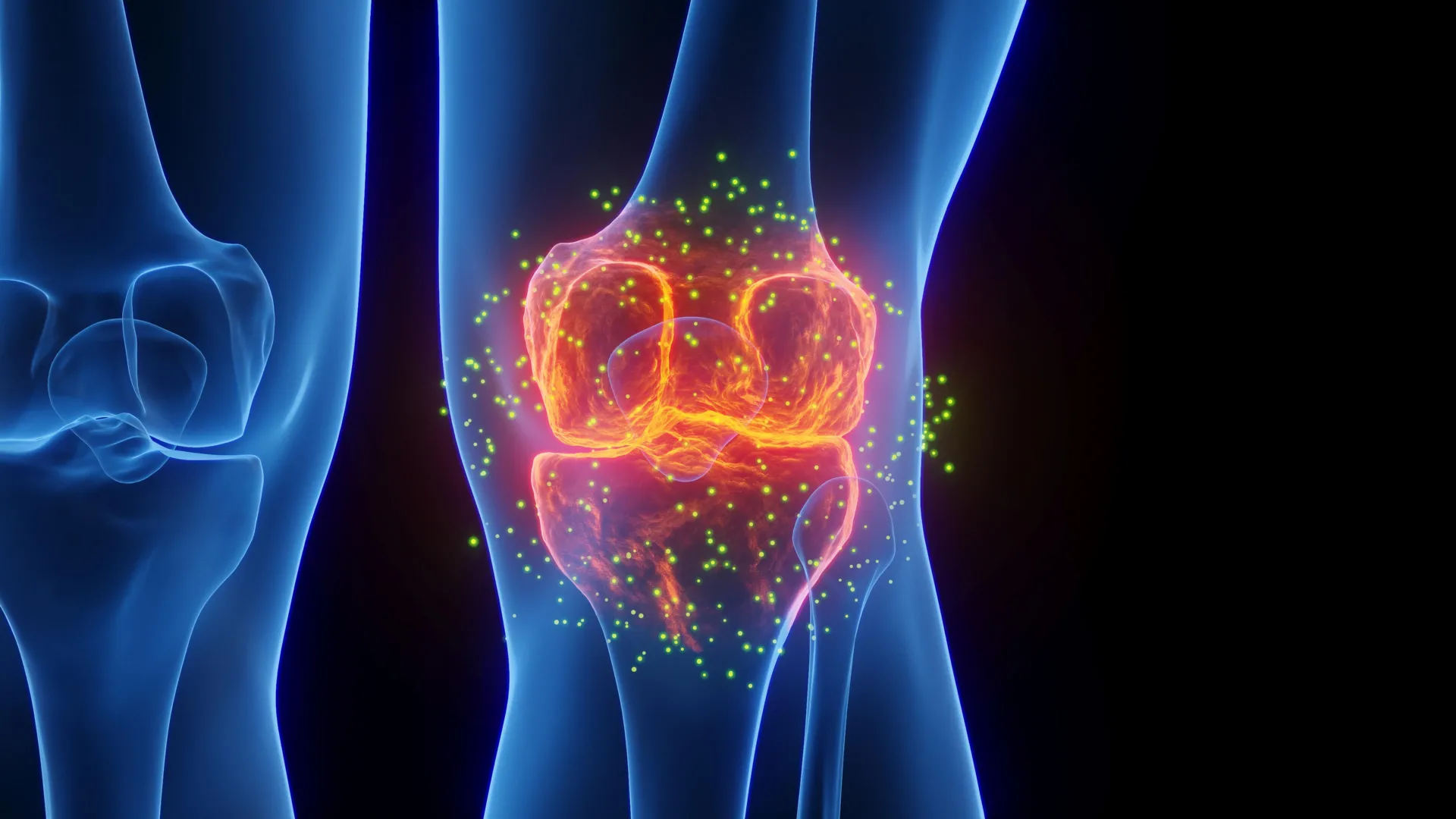
For anyone whose relationship with the outdoors has been slowly dismantled by chronic knee pain, the distance between the front door and the garden bed can feel longer than any trail.
When the Body Blocks the Path Back Outside
Cynthia Schraf-Fletcher is 74 years old and, for much of the past year, has been back on a stationary bicycle and tending her garden without the grinding pain that had come to define those activities. That return didn’t happen through a second knee replacement surgery. It happened through a procedure called genicular artery embolization - GAE - performed on her right knee by Leigh Casadaban, MD, MS, an assistant professor of radiology at the University of Colorado Anschutz School of Medicine. Schraf-Fletcher describes the results as “remarkably” successful, rating the relief comparable to the total knee replacement she previously had on her left knee. “I couldn’t be more pleased,” she says.
Her case illustrates something that millions of people with osteoarthritis encounter: a gap in available options. Medications, physical therapy, and steroid injections sit at one end of the treatment spectrum. Total knee replacement surgery sits at the far end. For a long time, there was almost nothing in between for patients who had exhausted conservative care but weren’t ready - or willing - to undergo major surgery.
GAE was developed in Japan a little more than a decade ago. Since 2021, the FDA has granted breakthrough device status to multiple devices related to the procedure in the United States, marking a shift in how seriously the American medical system is beginning to take it.
How the Procedure Works
GAE targets the blood supply feeding chronic inflammation inside the knee joint. Osteoarthritis triggers the growth of abnormal blood vessels in inflamed tissue; by reducing blood flow to those vessels, the procedure is designed to decrease both swelling and pain. The mechanism is precise rather than sweeping - the goal is not to shut down circulation broadly but to interrupt the specific vascular activity driving the joint’s distress.
The procedure itself takes between one and two hours and is performed under conscious sedation as an outpatient treatment. An interventional radiology team makes a small incision near the crease of the leg, then advances a tiny catheter through the femoral artery using X-ray imaging and contrast dye for navigation. The catheter travels until it reaches the genicular arteries surrounding the knee.
Once positioned correctly, the team releases microscopic beads into the abnormal vessels identified as pain sources. Those beads block blood flow to the inflamed tissue. Patients are monitored for several hours afterward and typically return home the same day.
Recovery is measured in days rather than months. Doctors generally advise resting for a few days, and then the process of improvement - gradual for some, faster for others - begins.
Casadaban describes where GAE fits in the clinical picture plainly: “For treating osteoarthritis in the knees, we often think of medications, physical therapy, maybe a steroid injection, and then on the far end of the spectrum is a total knee replacement. There really hasn’t been anything for patients in between. GAE is a promising minimally invasive procedure that may fill that spot for people who have failed conservative treatments but are not yet ready to have a major surgery.”
What the Data Shows - And Who Benefits Most
People with mild to moderate osteoarthritis tend to get the most durable results. Patients with more advanced disease can still undergo the procedure, though the effects are generally shorter-lived. Across the patient population Casadaban has treated, the outcomes skew strongly positive.
“We find about 70% of patients have phenomenal results,” Casadaban says. “They cut their pain scores in half, sometimes more. We have a few patients with no pain at all after the procedure.”
Four-year data from Japan - where GAE has had a longer clinical track record - shows that a single outpatient procedure can sustain pain relief across that entire window. In the United States, two-year data now supports the same durability for patients who respond well. Casadaban frames the implication carefully: “That really speaks to the theory that we’re hopefully modifying something in the joint.”
The distinction between symptomatic relief and actual joint modification matters enormously for outdoor activity. A painkiller manages sensation. A structural change - or something approaching one - might allow a person to kneel in soil, step across uneven ground, or hold a pedaling rhythm without the fear of immediate deterioration.
Schraf-Fletcher had come to GAE after experiencing complications from her original knee replacement surgery. She was looking for a different path. Looking back, she says it was the right call.
The Wider Picture for an Active Life
Osteoarthritis is not a condition that exists only in clinical settings. It lives in the pause before stepping off a curb, in the hesitation before a morning walk, in the mental calculation of how many steps the trailhead parking lot requires. For the population of people who define their quality of life at least partly by access to the outdoors - gardeners, walkers, cyclists, anyone who moves through the natural world on their own terms - the treatment gap that GAE is beginning to fill carries real weight.
Casadaban is currently leading two clinical trials at the University of Colorado Anschutz. One study is examining changes in knee fluid among patients receiving GAE. The other is evaluating a temporary arterial treatment device called Nexsphere-F, which would allow doctors to test a patient’s response before committing to a permanent intervention.
The research pipeline suggests this is not a procedure at the edge of fringe medicine but one moving steadily toward wider availability. The FDA’s repeated granting of breakthrough device status to related devices since 2021 signals institutional momentum, not just individual enthusiasm.
What GAE cannot do - and what no treatment short of replacement currently can - is restore a severely deteriorated joint to its original architecture. The procedure is not positioned as a cure but as an interruption: a way to quiet the inflammation cycle long enough for a patient to reclaim function, rebuild activity, and postpone - or potentially avoid - an operation with a substantially longer recovery and higher surgical risk.
For Schraf-Fletcher, that interruption has lasted nearly a year so far, and gardening is no longer something she watches from a window.